Home
Home  Navigation


When Bethesda unveiled Oblivion Remastered earlier this week, it felt surreal. The 2006 journey through Tamriel—once notorious for its quirky character models and blurry low-res landscapes—now stands as the most visually stunning Elder Scrolls title to date. Despite countless HD remasters setting low expectations (think Mass Effect Legendary Edition or Dark Souls Remastered, which barely diverged from their Xbox 360 roots), witnessing the Imperial City reborn in Unreal Engine 5 with ray tracing was jaw-dropping. Beyond visuals, combat mechanics, RPG systems, and countless details have been refined. Given the scope, I questioned whether "Remastered" was underselling it—shouldn’t this be called Oblivion Remake?
Turns out, I wasn’t alone. Fans and even Bruce Nesmith, lead designer of the original, argued "remaster" doesn’t capture its ambition. Yet after hours of gameplay, it’s evident: Oblivion Remastered dazzles like a remake but operates as a remaster.
The remake-like overhaul stems from Virtuos’ exhaustive effort: every asset, from trees to weapons, was rebuilt. The result meets modern graphical standards—crisp textures, dynamic lighting, and physics that make every arrow strike feel real. NPCs retain their 2006 essence but sport entirely new models. This isn’t nostalgia-filtered; it’s a 2025-caliber experience. Had I seen it unannounced, I’d have mistaken it for The Elder Scrolls 6.
Visuals aren’t the only upgrade. Combat now delivers weightier blows, the third-person camera finally works, and menus—from dialogue to lockpicking—are streamlined. The infamous leveling system merges Oblivion’s and Skyrim’s designs, and yes, sprinting exists. With so many enhancements, isn’t this a remake?
Had Oblivion Remastered leaked without context, I’d have sworn it was TES6.
The debate boils down to semantics, not scope. The industry lacks clear definitions: Rockstar’s GTA "Definitive Editions" barely masked their PS2 origins, while Crash Bandicoot N. Sane Trilogy—also labeled a remaster—felt like a modern release. Remakes vary wildly too, from Bluepoint’s faithful Shadow of the Colossus rebuild to Final Fantasy 7’s narrative overhaul. Today, a remaster likely means preserving core design with visual polish, while a remake reimagines the experience.
By that logic, Oblivion Remastered nails its classification. Beneath Unreal Engine 5’s sheen lies Bethesda’s 2006 skeleton—quirks and all. As the studio stated, they “upgraded every part without altering the soul.”
The original’s DNA lingers everywhere: loading screens behind doors, the perplexing persuasion minigame, NPCs moving like wind-up toys, and combat that’s still clunky despite improvements. Bugs? Still present, lovingly preserved.
Oblivion’s age shows in its rough edges.
Comparing it to Obsidian’s Avowed underscores its legacy status. Yet Oblivion’s charm endures—its open-world mysteries, dynamic faction wars, and player-driven quests outshine Skyrim’s formulaic dungeons. Its freedom-focused design feels fresh post-2010s hand-holding trends. But make no mistake: Oblivion Remastered is a time capsule, not a reinvention.
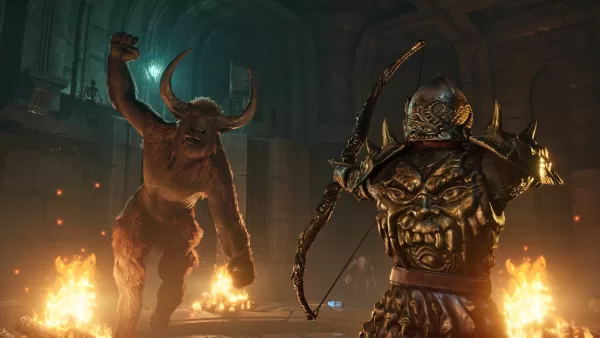
Games borrow film terminology, but the parallels hold. Movie remakes start from scratch; remasters polish classics like The Godfather’s 4K restoration—still undeniably ’70s films. Oblivion Remastered mirrors this: Unreal Engine 5 breathes new life into a 2000s masterpiece. As Virtuos’ Alex Murphy put it, "The original engine is the brain; Unreal 5 is the body."
Calling it a remaster isn’t a slight—it’s a benchmark. This is the gold standard Mass Effect Legendary Edition missed and GTA Trilogy ignored. Oblivion Remastered blends remake-tier passion with remaster authenticity, and that’s its triumph.
Like film restorations, Oblivion Remastered proves classics can shine anew without losing their era’s fingerprint. It’s a labor of love—both for the past and the future.
 Latest Articles










 Latest Games