Heim
Heim  Navigation


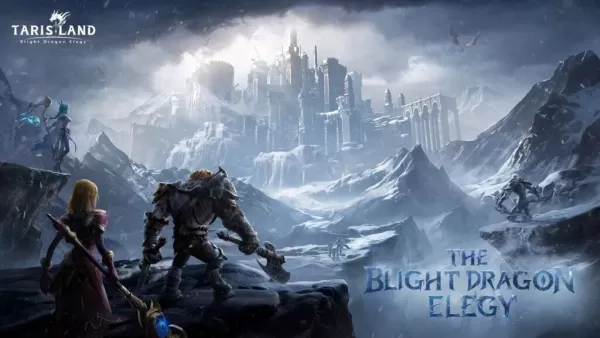
You're absolutely right — the closure of Tarisland feels like a familiar echo in today’s rapidly shifting MMO landscape. One year from global launch to permanent shutdown? That’s not just a short lifespan — it’s a flash in the pan, and sadly, not an uncommon story.
Let’s break it down:
Why Tarisland Didn’t Last
-
Short-Lived Seasonal Content Model
While seasonal progression can work (see: Destiny 2), it only thrives when players feel their time and effort matter. Tarisland’s decision to remove launch content after a few months likely created a sense of impermanence — a "playing on borrowed time" feeling. Players don’t invest in a world they expect to vanish. -
Premium Currency System That Pushed Players Away
This is the killer. Even if the core gameplay was solid — and by all accounts, it was — a monetization model that made progression feel gated to payers destroys long-term retention. In an age where "free-to-play" often means "pay-to-win," players are very sensitive. If the game felt like it rewarded spending over skill or dedication, it lost trust fast. -
Lack of Community and Long-Term Vision
MMORPGs live or die by their communities. Tarisland launched with a strong visual and mechanical foundation, but without sustained updates, meaningful events, or developer engagement, that initial buzz fizzled. The absence of a player-driven culture made it easy for people to leave — and hard to come back. -
The "MMO as a Service" Trap
Tarisland tried to ride the wave of live-service gaming — but it didn’t adapt. Instead of evolving based on feedback, it seemed to treat the game as a product to be sold, not a world to be nurtured. That’s a fatal flaw.
But Was It All Bad?
Not at all.
- The 5-player dungeon design was sharp, with clever mechanics and pacing.
- The 10-player raids had real weight and teamwork emphasis — a breath of fresh air compared to the chaotic, loot-rush builds of some modern MMOs.
- The Western fantasy aesthetic was well-realized, with a distinct tone that felt more like a novel than a standard "sword and sorcery" trope.
So yes — the game had promise. It just didn’t get the time, care, or commitment to grow.
A Bittersweet Lesson
Tarisland’s shutdown isn’t just the end of a game — it’s a cautionary tale for developers, publishers, and players alike:
- For devs: Don’t treat MMORPGs like disposable mobile games. They need vision, patience, and community-first design.
- For publishers: You can’t throw money at a game and expect it to survive without a sustainable roadmap.
- For players: We’re losing more gems than we realize. This isn’t just about entertainment — it’s about worlds we believed in.
Final Thought
The worst part isn’t that Tarisland shut down — it’s that it was so close. With better monetization, longer content arcs, and more player investment, it might’ve become a cult favorite, like Rift or even Star Wars: The Old Republic in its prime.
Instead, it’s another ghost in the digital graveyard.
So yes — I’ll miss the raids, the lore, the nights spent grinding with a squad I never met in real life but felt like family.
And I’ll keep hoping the next one gets it right.
👉 What about you? Did you play Tarisland? Would you have stayed — or did it just feel like another "lifestyle game" that didn’t care about you? Share your memories in the comments — before it’s gone forever.
And if you’re craving something new, don’t miss our deep dive into Monster Hunter Now Season 7: Advent of the Exploration Base — because the hunt never really ends. 🌍⚔️
 Neueste Artikel








 Neueste Spiele